skip to content
exploring: undefined
es
Mixed Use

Polo Park Master Plan
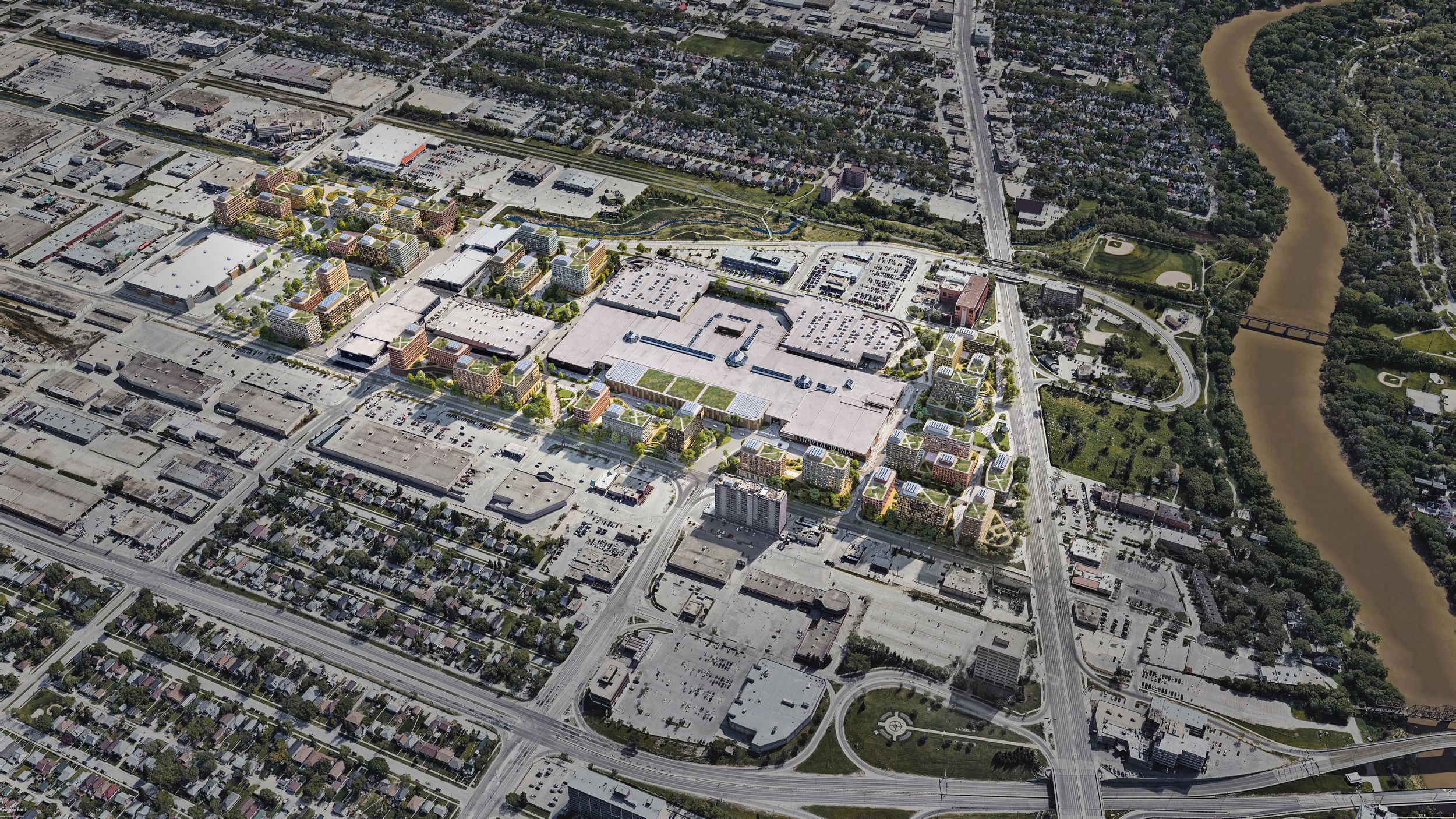
Polo Park’s redevelopment transforms Winnipeg’s premier shopping destination into a vibrant mixed-use neighborhood. With 60% of the site currently devoted to parking, our master plan applies a Landscape First approach to reimagine this underused space as a prairie-inspired community that blends retail vitality with new residential living—offering a fresh model for mall evolution in Canadian cities.
project Type
Mixed Use
location
Winnipeg, Manitoba
client
Cadillac Fairview Corporation Limited & Shindico
dates
2022 - present
expertise
Urban Design, Architecture, Landscape Architecture
Aerial site plan showing a large commercial development complex adjacent to residential neighborhoods and a river, with mixed-use buildings and parking areas.
Mixed Use

Polo Park Master Plan

Aerial site plan showing a large commercial development complex adjacent to residential neighborhoods and a river, with mixed-use buildings and parking areas.
project Type
Mixed Use
location
Winnipeg, Manitoba
client
Cadillac Fairview Corporation Limited & Shindico
dates
2022 - present
expertise
Urban Design, Architecture, Landscape Architecture
Polo Park’s redevelopment transforms Winnipeg’s premier shopping destination into a vibrant mixed-use neighborhood. With 60% of the site currently devoted to parking, our master plan applies a Landscape First approach to reimagine this underused space as a prairie-inspired community that blends retail vitality with new residential living—offering a fresh model for mall evolution in Canadian cities.

The fact that more than half of this thriving retail site is occupied by parking highlights the untapped potential of suburban malls across Canada. Rather than treating parking as a fixed necessity, we see it as an opportunity to introduce complete neighborhoods while preserving the commercial draw that makes Polo Park a regional hub.
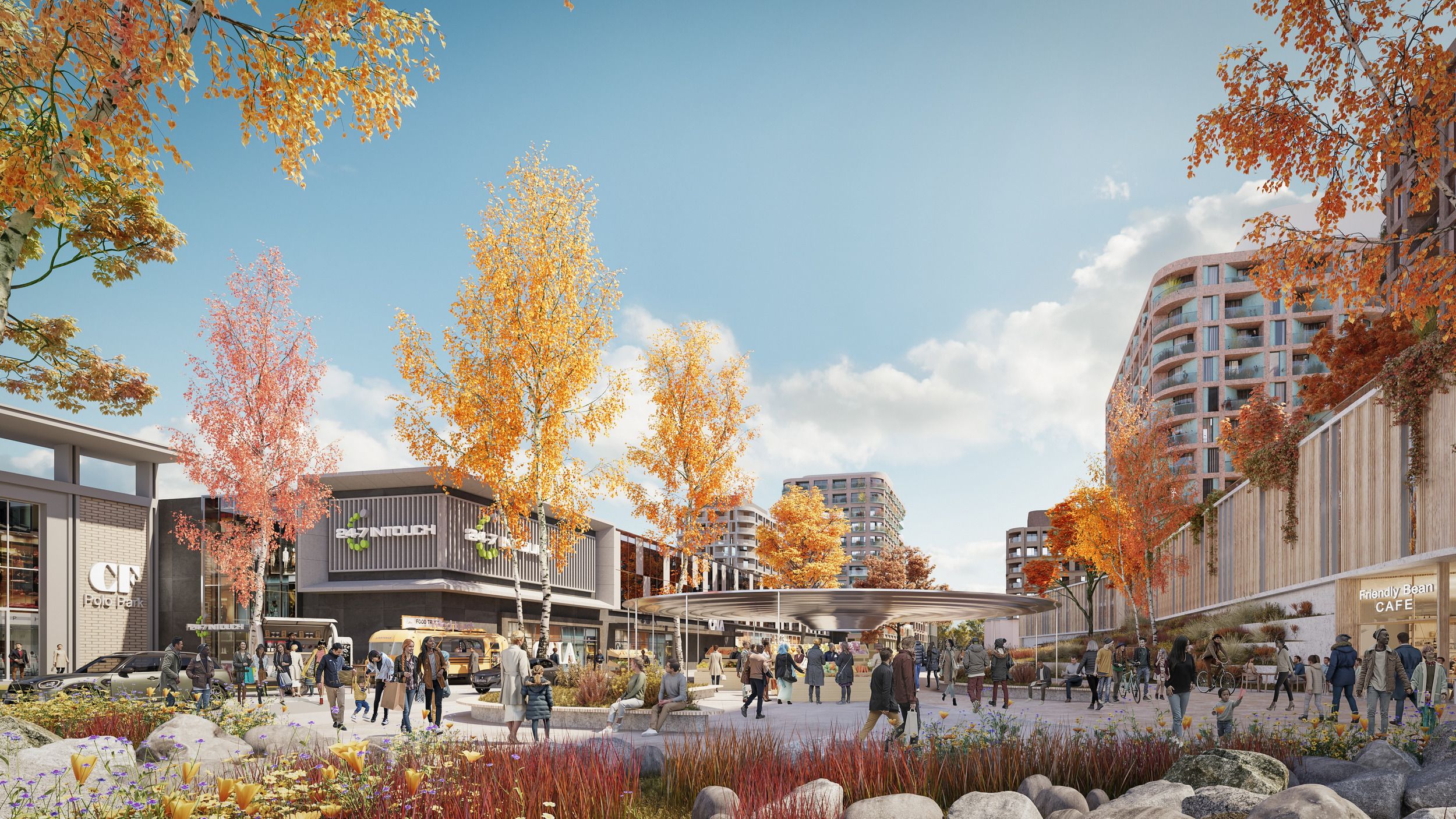
Architectural rendering of a modern outdoor shopping plaza with fall foliage, retail storefronts, and residential towers in an urban mixed-use development.
Our multi-phase approach strategically introduces residential buildings around the site perimeter, appropriately scaled to existing context while freeing up land through smarter parking solutions that consolidate existing structures and anticipate future needs.

At the heart of our design is a deep connection to Manitoba’s distinctive landscape and climate. Guided by our Landscape First approach, the plan organizes the site into five distinct nodes of activity—market, plaza, hub, promenade, and ecosite—each enriched with prairie-informed plantings that celebrate local ecology and the beauty of seasonal change. This design fosters a strong sense of place, linking residents and visitors to the site’s natural and cultural heritage, while embedding regenerative strategies into Polo Park’s future identity.
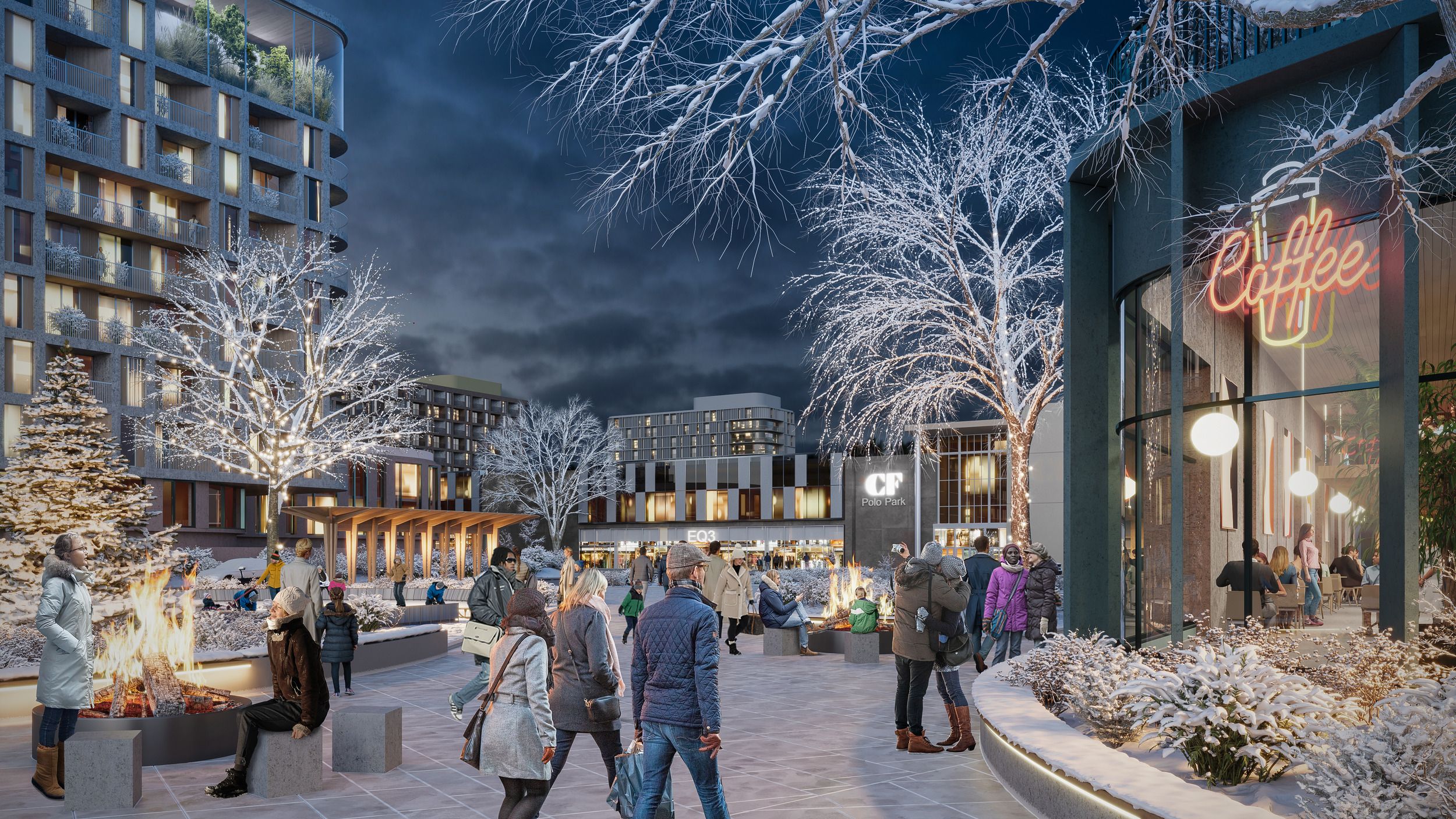
Architectural rendering of a winter plaza featuring illuminated trees, fire pits, a coffee shop, and mixed-use residential buildings with people gathering in the evening.
At the heart of the design is a heightened sense of place relating to the ecology and history of a site that will incorporate regenerative design as a core driver for the future identity of Polo Park.

Creating a true neighborhood means more than adding housing to retail land. Our infill strategy shapes a defined and varied public realm, shifting the mall from a car-oriented environment to a walkable community with welcoming public spaces. Residential buildings respond to their immediate surroundings while contributing to a larger network of connected gathering places designed for Manitoba’s diverse seasons. Phased development ensures steady momentum, allowing retail operations to thrive throughout the transformation.
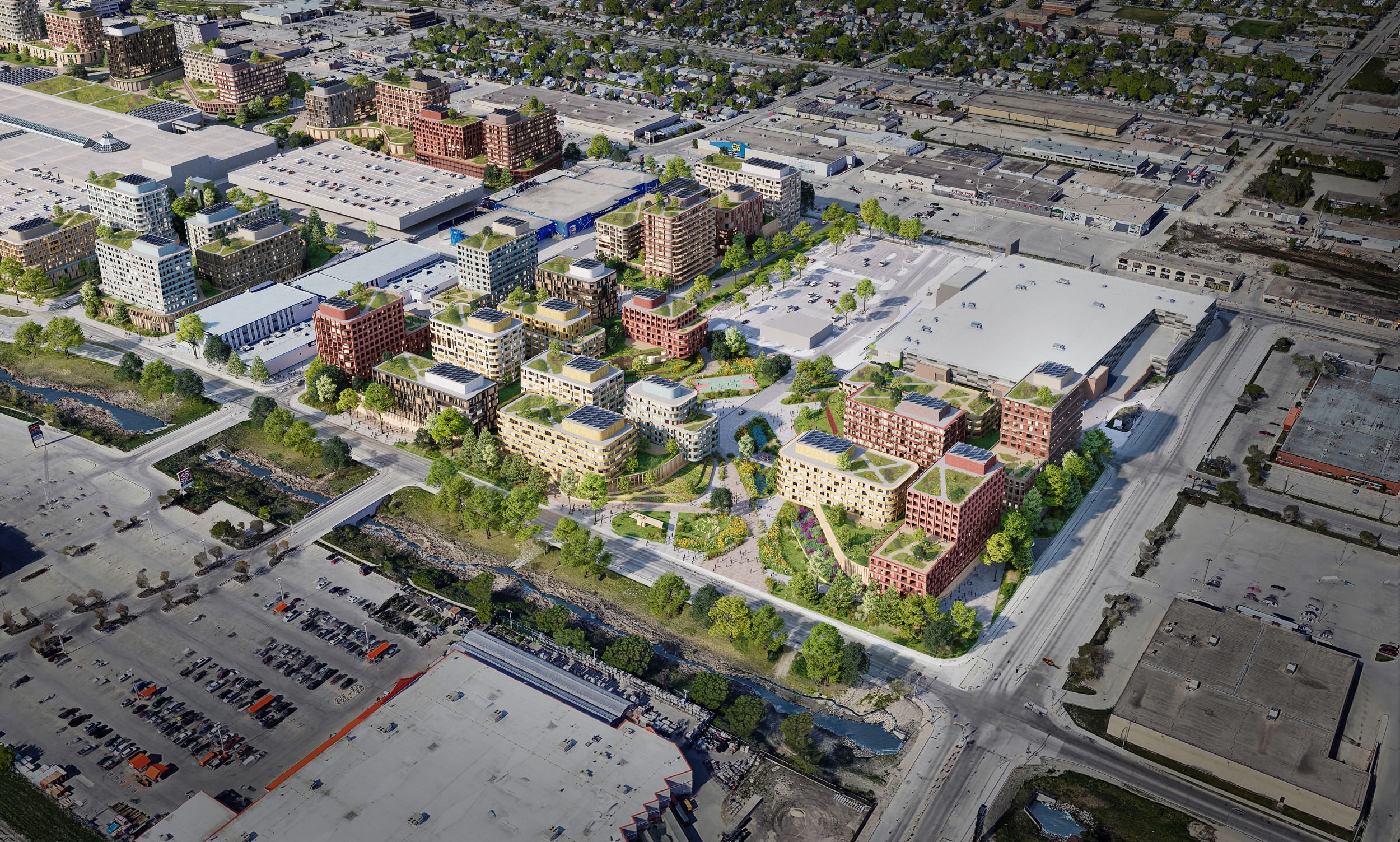
Aerial rendering of a proposed mixed-use urban development featuring multi-story residential buildings, green spaces, and surrounding parking areas.

Polo Park shows how regional shopping centers can adapt to evolving community needs without losing their economic strength. By intensifying underused land, we introduce new housing in an established area with strong transit links and nearby amenities. This approach offers a replicable model for Canadian cities confronting suburban sprawl and housing demand—demonstrating how integrating retail and residential uses can create more sustainable, resilient, and complete communities.